About Picnic at Hanging Rock
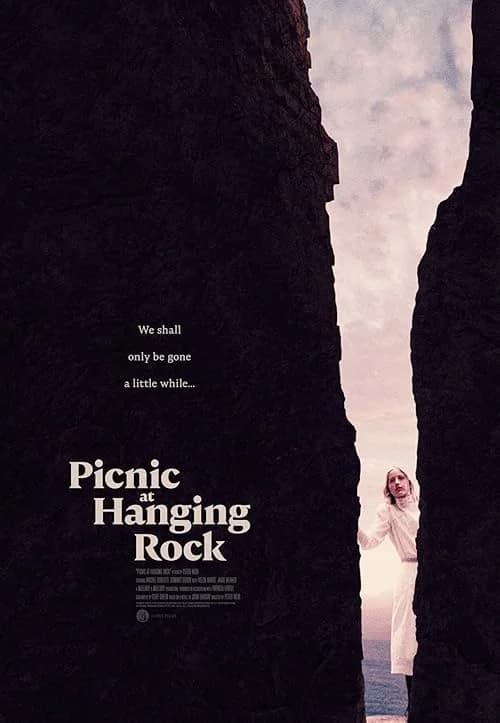
Peter Weir's 1975 masterpiece 'Picnic at Hanging Rock' remains one of cinema's most beguiling and atmospheric mysteries. Set on a stifling Valentine's Day in 1900, the film follows students and staff from Appleyard College, a strict Australian girls' school, as they embark on a picnic to the ancient volcanic formation of Hanging Rock. What begins as a genteel excursion descends into an unfathomable enigma when three students and a teacher vanish amidst the sun-drenched rocks, leaving no trace or rational explanation.
The film's power lies not in solving the mystery, but in its hypnotic, dreamlike exploration of the aftermath. Weir masterfully builds an atmosphere of oppressive heat, repressed Victorian sexuality, and primordial unease, using the Australian landscape as both a beautiful backdrop and a menacing, timeless character. The ensemble cast, including Helen Morse, Rachel Roberts, and the ethereal Anne-Louise Lambert as the enigmatic Miranda, deliver performances of haunting restraint.
'Picnic at Hanging Rock' is essential viewing for its poetic direction, stunning cinematography by Russell Boyd, and a haunting score by Bruce Smeaton and Gheorghe Zamfir. It transcends the mystery genre to become a profound meditation on colonialism, time, and the clash between rigid societal order and the unknowable forces of nature. Watch this iconic piece of Australian New Wave cinema for an experience that lingers long after the credits roll, inviting endless interpretation and reflection.
The film's power lies not in solving the mystery, but in its hypnotic, dreamlike exploration of the aftermath. Weir masterfully builds an atmosphere of oppressive heat, repressed Victorian sexuality, and primordial unease, using the Australian landscape as both a beautiful backdrop and a menacing, timeless character. The ensemble cast, including Helen Morse, Rachel Roberts, and the ethereal Anne-Louise Lambert as the enigmatic Miranda, deliver performances of haunting restraint.
'Picnic at Hanging Rock' is essential viewing for its poetic direction, stunning cinematography by Russell Boyd, and a haunting score by Bruce Smeaton and Gheorghe Zamfir. It transcends the mystery genre to become a profound meditation on colonialism, time, and the clash between rigid societal order and the unknowable forces of nature. Watch this iconic piece of Australian New Wave cinema for an experience that lingers long after the credits roll, inviting endless interpretation and reflection.