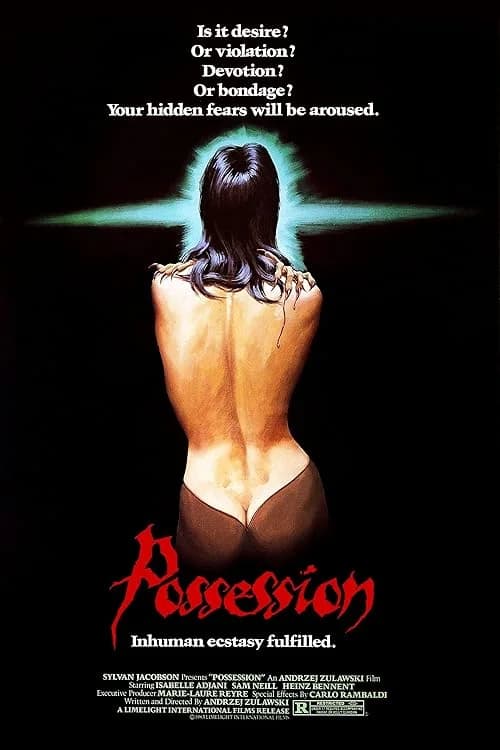
About Possession
Andrzej Żuławski's 1981 masterpiece 'Possession' stands as one of cinema's most intense explorations of marital disintegration and psychological horror. The film follows Mark, who returns to West Berlin to find his wife Anna requesting a divorce and exhibiting increasingly erratic, violent behavior. What begins as suspicions of infidelity spirals into a surreal nightmare involving doppelgängers, monstrous transformations, and cosmic horror lurking in a Berlin apartment.
Isabelle Adjani delivers what many consider the performance of her career as Anna, winning Best Actress at Cannes for her physically and emotionally raw portrayal of a woman undergoing supernatural and psychological metamorphosis. Sam Neill matches her intensity as the husband descending into parallel madness. Żuławski's direction creates an atmosphere of claustrophobic dread, using the divided Berlin as a perfect metaphor for fractured psyches and relationships.
Viewers should watch 'Possession' for its uncompromising vision that defies genre categorization. Part psychological drama, part body horror, part allegory for Cold War anxieties, the film remains uniquely disturbing decades later. The practical effects for its infamous creature remain impressive, serving the story's themes of birth, transformation, and the monstrous aspects of human relationships. This cult classic offers an experience that's both intellectually challenging and viscerally frightening, essential viewing for horror aficionados and art-house cinema enthusiasts alike.
Isabelle Adjani delivers what many consider the performance of her career as Anna, winning Best Actress at Cannes for her physically and emotionally raw portrayal of a woman undergoing supernatural and psychological metamorphosis. Sam Neill matches her intensity as the husband descending into parallel madness. Żuławski's direction creates an atmosphere of claustrophobic dread, using the divided Berlin as a perfect metaphor for fractured psyches and relationships.
Viewers should watch 'Possession' for its uncompromising vision that defies genre categorization. Part psychological drama, part body horror, part allegory for Cold War anxieties, the film remains uniquely disturbing decades later. The practical effects for its infamous creature remain impressive, serving the story's themes of birth, transformation, and the monstrous aspects of human relationships. This cult classic offers an experience that's both intellectually challenging and viscerally frightening, essential viewing for horror aficionados and art-house cinema enthusiasts alike.