About Dancer in the Dark
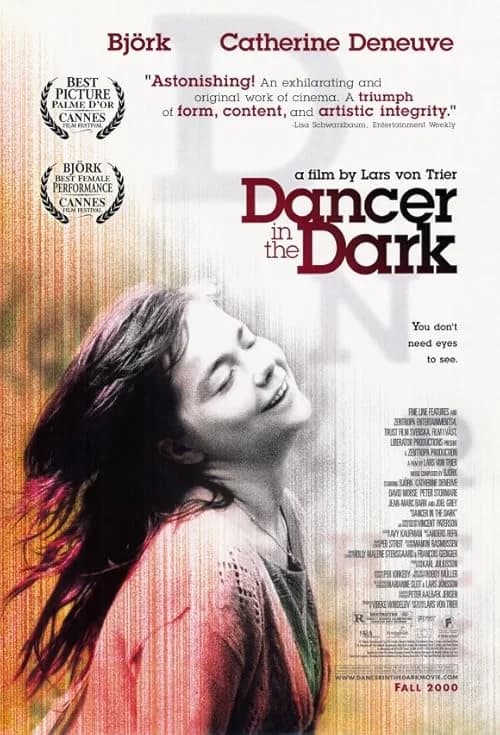
Dancer in the Dark (2000) stands as one of Lars von Trier's most emotionally devastating and formally daring works. This Palme d'Or-winning musical drama follows Selma (Björk), a Czech immigrant factory worker in 1960s America who is gradually losing her eyesight due to a genetic condition. Her sole motivation is to save enough money for an operation that will prevent her young son from suffering the same fate. Selma escapes her harsh reality through elaborate musical fantasies inspired by the Hollywood musicals she loves, where the rhythmic sounds of her industrial workplace transform into soaring song-and-dance numbers.
Björk delivers a performance of astonishing vulnerability and raw power, earning the Best Actress award at Cannes for her portrayal of a woman whose innocence and optimism are tested by cruel circumstances. Catherine Deneuve provides strong support as Selma's loyal friend and coworker. Von Trier's direction combines handheld digital cinematography with stylized musical sequences, creating a jarring yet effective contrast between Selma's bleak existence and her vibrant inner world.
The film's unconventional approach to the musical genre—using diegetic sound as the basis for its songs—makes it a unique cinematic experience. As Selma's situation grows increasingly desperate due to a neighbor's betrayal and a tragic turn of events, the film builds toward an almost unbearably poignant conclusion. Dancer in the Dark remains essential viewing for those interested in boundary-pushing cinema, remarkable performances, and stories that explore the human capacity for hope amidst suffering. Its emotional impact and artistic ambition continue to resonate decades after its release.
Björk delivers a performance of astonishing vulnerability and raw power, earning the Best Actress award at Cannes for her portrayal of a woman whose innocence and optimism are tested by cruel circumstances. Catherine Deneuve provides strong support as Selma's loyal friend and coworker. Von Trier's direction combines handheld digital cinematography with stylized musical sequences, creating a jarring yet effective contrast between Selma's bleak existence and her vibrant inner world.
The film's unconventional approach to the musical genre—using diegetic sound as the basis for its songs—makes it a unique cinematic experience. As Selma's situation grows increasingly desperate due to a neighbor's betrayal and a tragic turn of events, the film builds toward an almost unbearably poignant conclusion. Dancer in the Dark remains essential viewing for those interested in boundary-pushing cinema, remarkable performances, and stories that explore the human capacity for hope amidst suffering. Its emotional impact and artistic ambition continue to resonate decades after its release.