About Capote
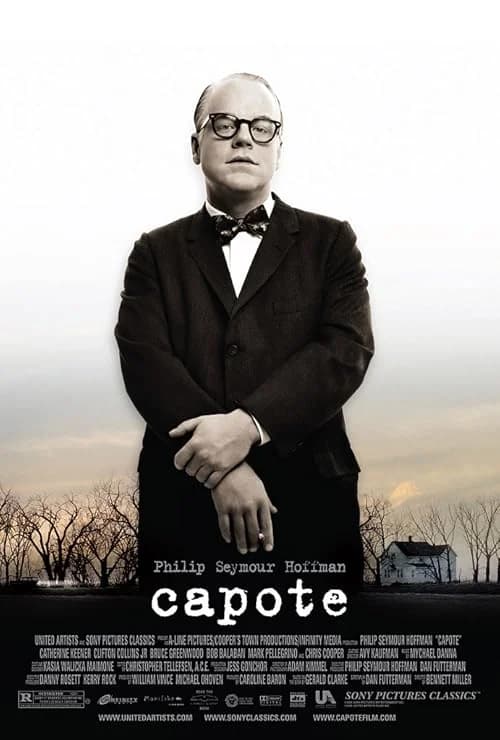
Capote (2005) is a masterful biographical drama that chronicles a pivotal period in the life of celebrated author Truman Capote. The film follows Capote as he travels to Kansas in 1959 to research the brutal murder of the Clutter family, an event that would become the subject of his groundbreaking nonfiction novel, 'In Cold Blood.' What begins as journalistic curiosity evolves into a deeply personal and morally complex journey as Capote forms an intimate, manipulative, and ultimately tragic relationship with one of the condemned killers, Perry Smith.
Philip Seymour Hoffman delivers a career-defining, Oscar-winning performance, perfectly capturing Capote's distinctive voice, flamboyant mannerisms, and the profound internal conflict beneath his public persona. Director Bennett Miller creates a tense, atmospheric film that is less about the crime itself and more about the ethics of storytelling and the cost of artistic obsession. The cinematography is stark and haunting, mirroring the bleak Kansas landscape and the chilling nature of the narrative.
Viewers should watch Capote for its exceptional acting, intelligent screenplay, and its profound exploration of ambition, empathy, and exploitation. It's a compelling character study that asks difficult questions about the relationship between an artist and his subject, making it essential viewing for fans of sophisticated drama and literary history.
Philip Seymour Hoffman delivers a career-defining, Oscar-winning performance, perfectly capturing Capote's distinctive voice, flamboyant mannerisms, and the profound internal conflict beneath his public persona. Director Bennett Miller creates a tense, atmospheric film that is less about the crime itself and more about the ethics of storytelling and the cost of artistic obsession. The cinematography is stark and haunting, mirroring the bleak Kansas landscape and the chilling nature of the narrative.
Viewers should watch Capote for its exceptional acting, intelligent screenplay, and its profound exploration of ambition, empathy, and exploitation. It's a compelling character study that asks difficult questions about the relationship between an artist and his subject, making it essential viewing for fans of sophisticated drama and literary history.